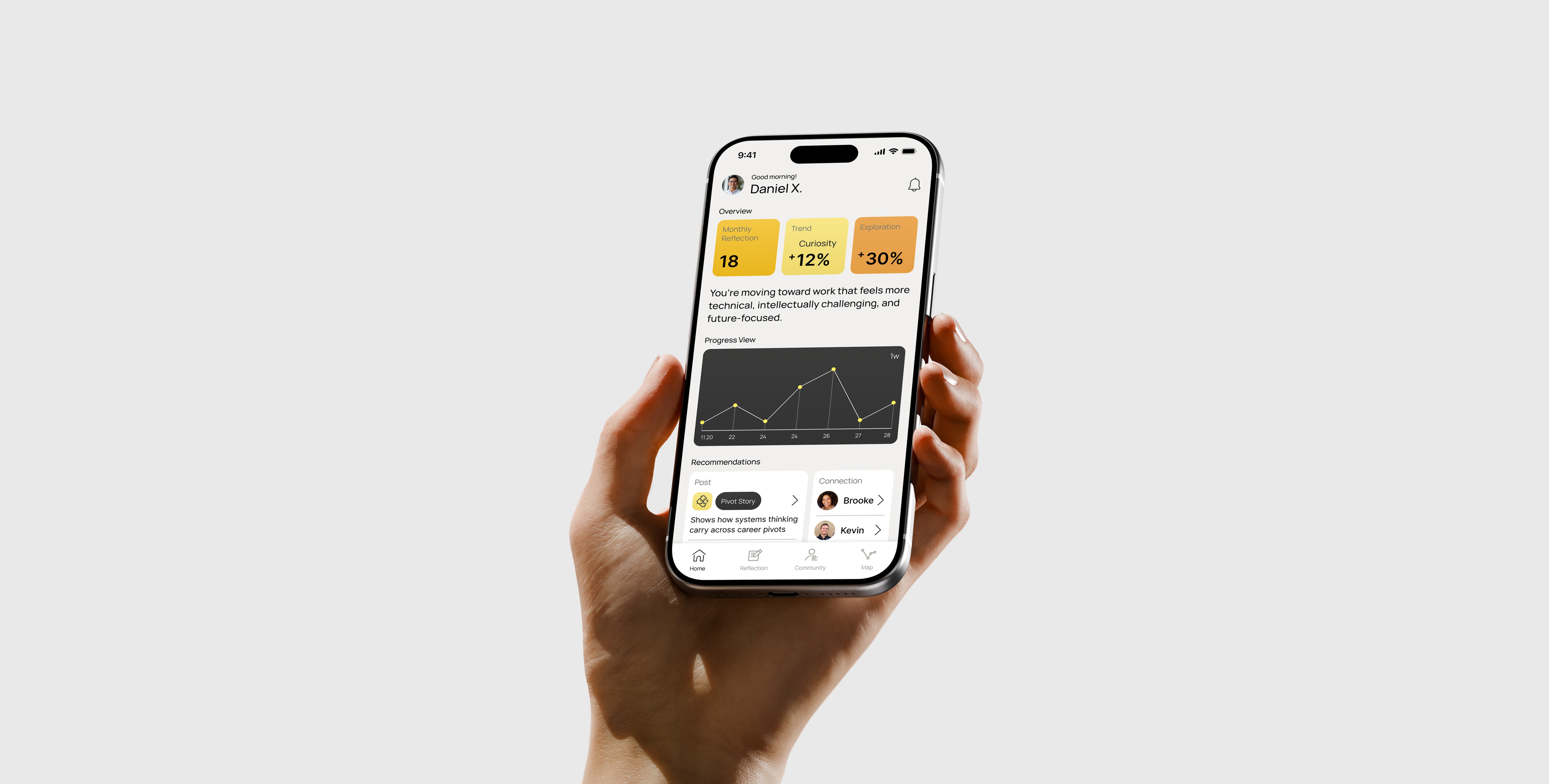
Polara
Role
UX · UI Designer
Deliverables
User Research, Wireframing, Prototyping, UI Design
Software
Figma, Illustrator, Photoshop, After Effects
Timeline
September - December 2025
Most career tools push roles and "apply now" momentum, but skip the step that matters most: understanding yourself first.
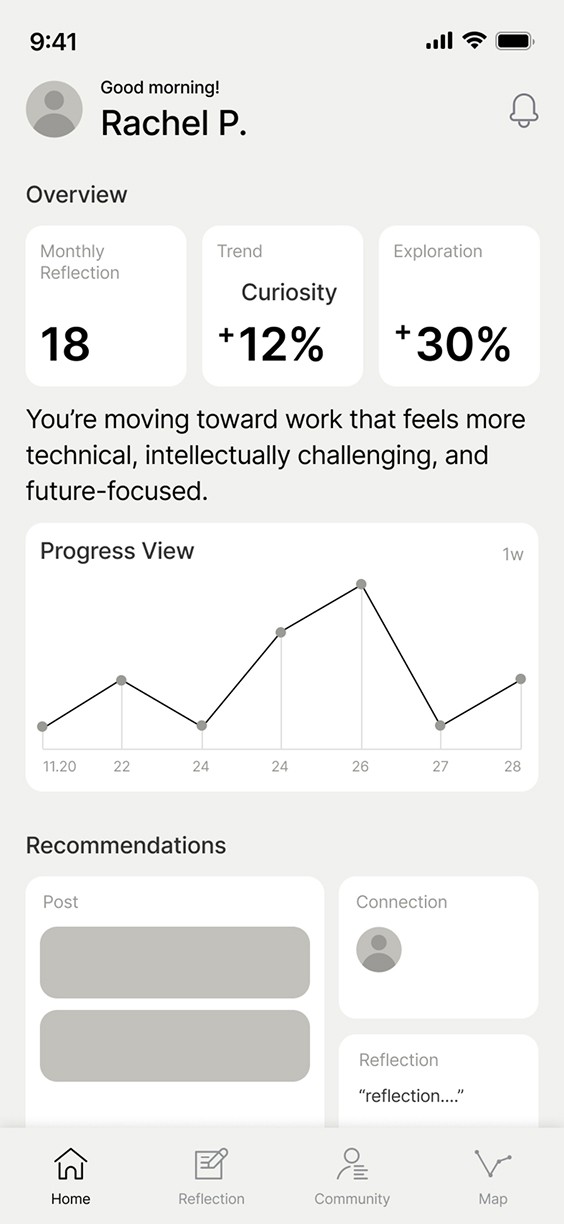
Polara helps you figure out who you are first — through daily reflection and pattern recognition that gradually surfaces what you already know but haven't named yet.
Background
Growing up drawn to art, I always struggled to translate that pull into a direction. When it came time to choose a path, I felt unprepared — not because options didn't exist, but because I didn't understand myself well enough to choose between them. That gap is where Polara begins.
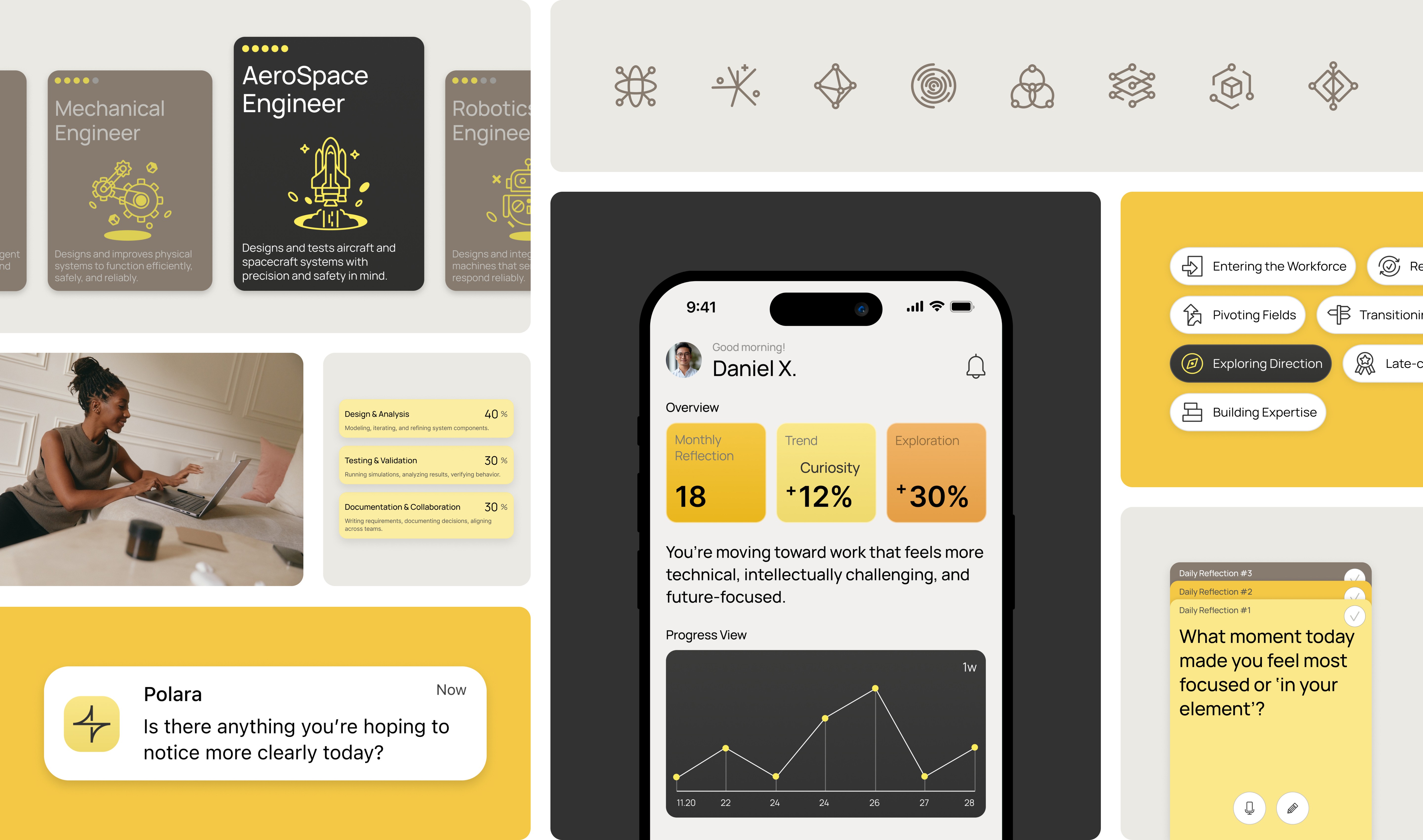
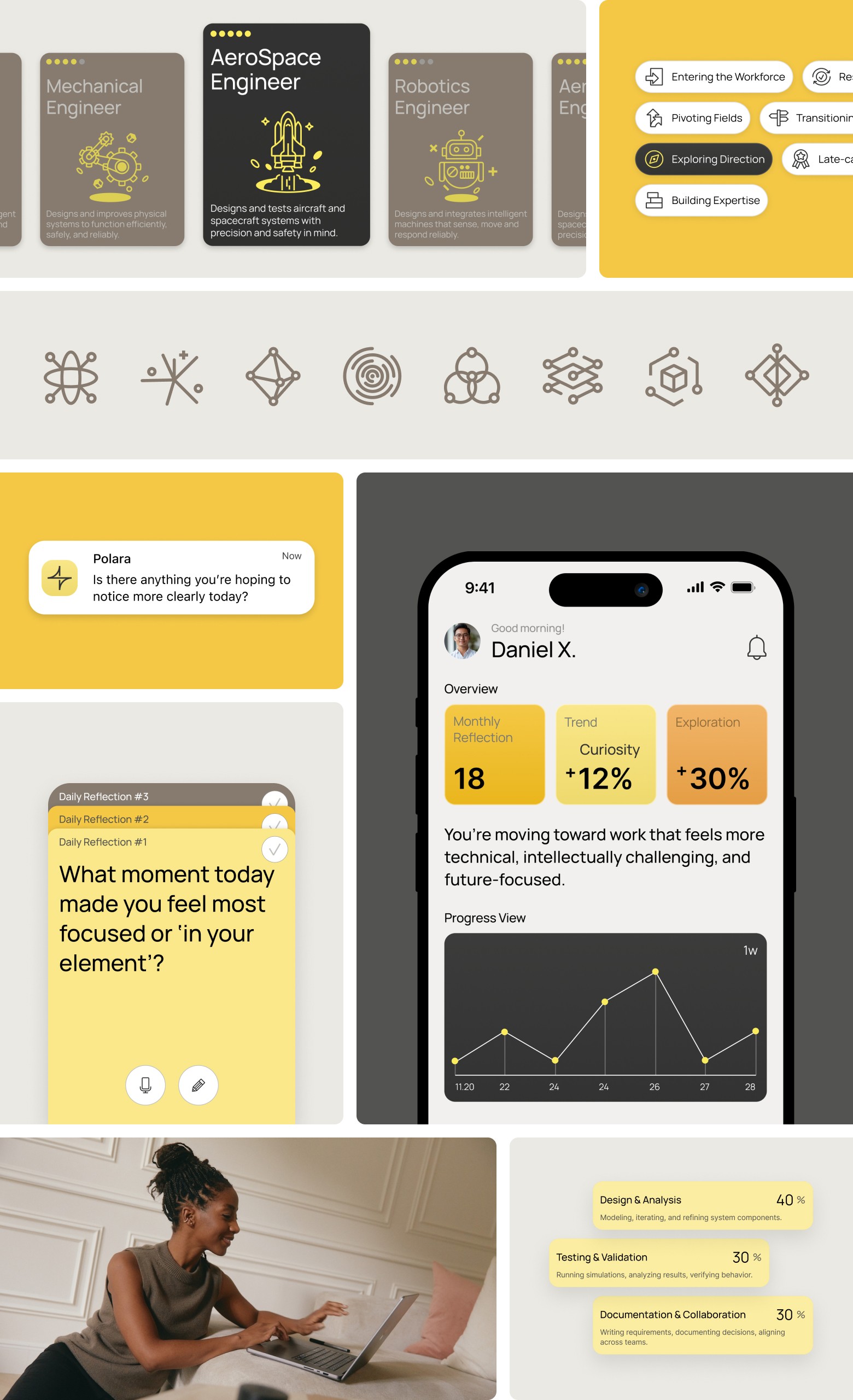
Like connecting constellations, meaning doesn’t come from individual points, but from recognizing patterns between them.
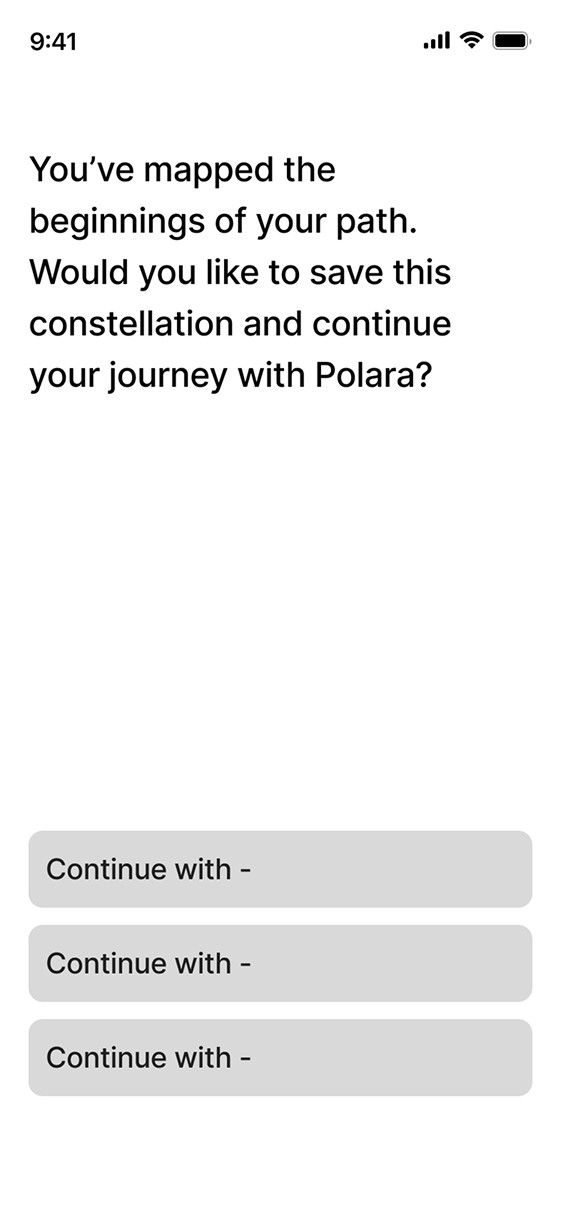
On-Boarding
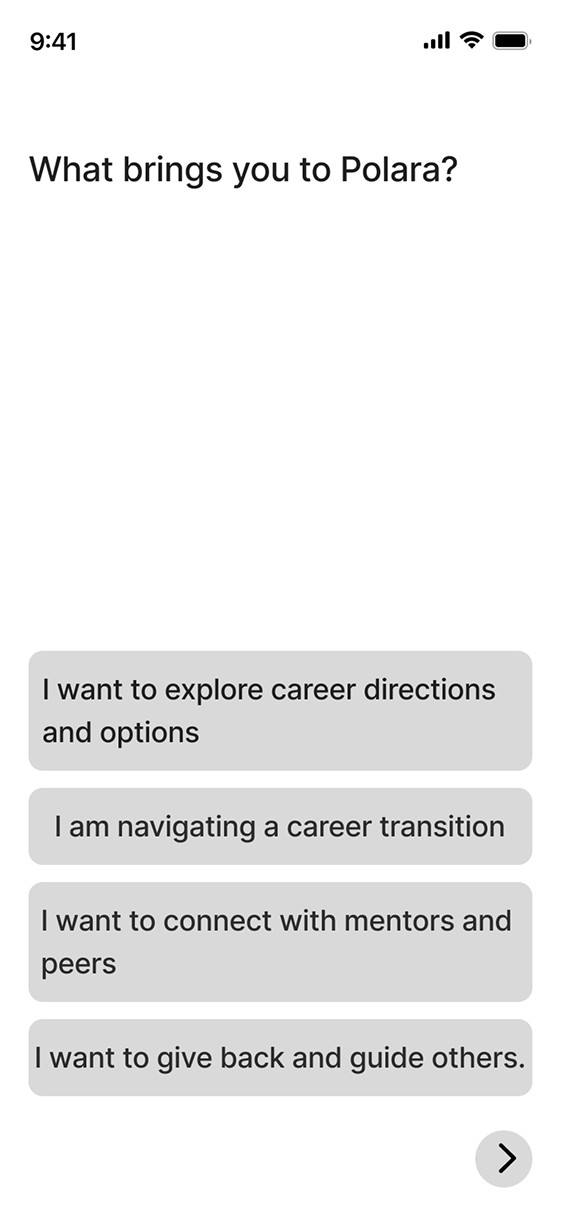
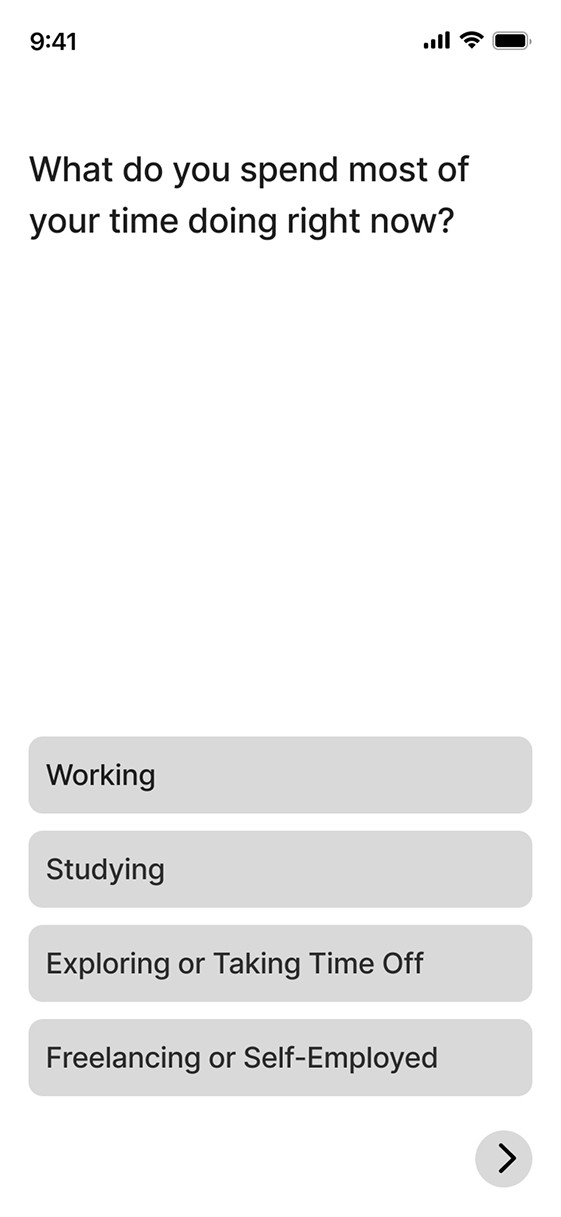
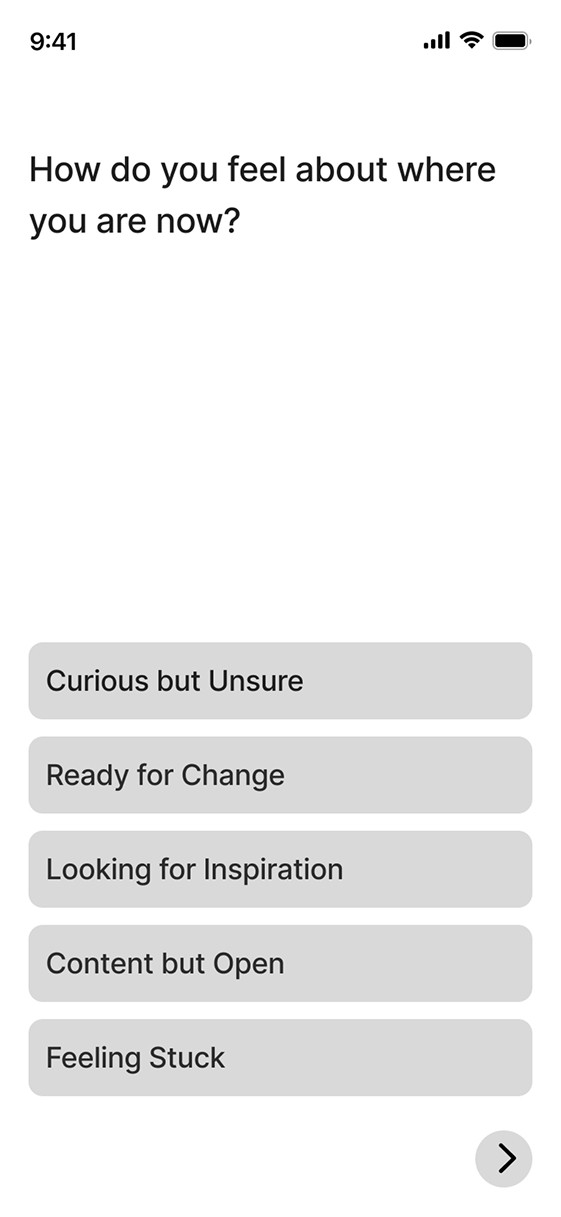
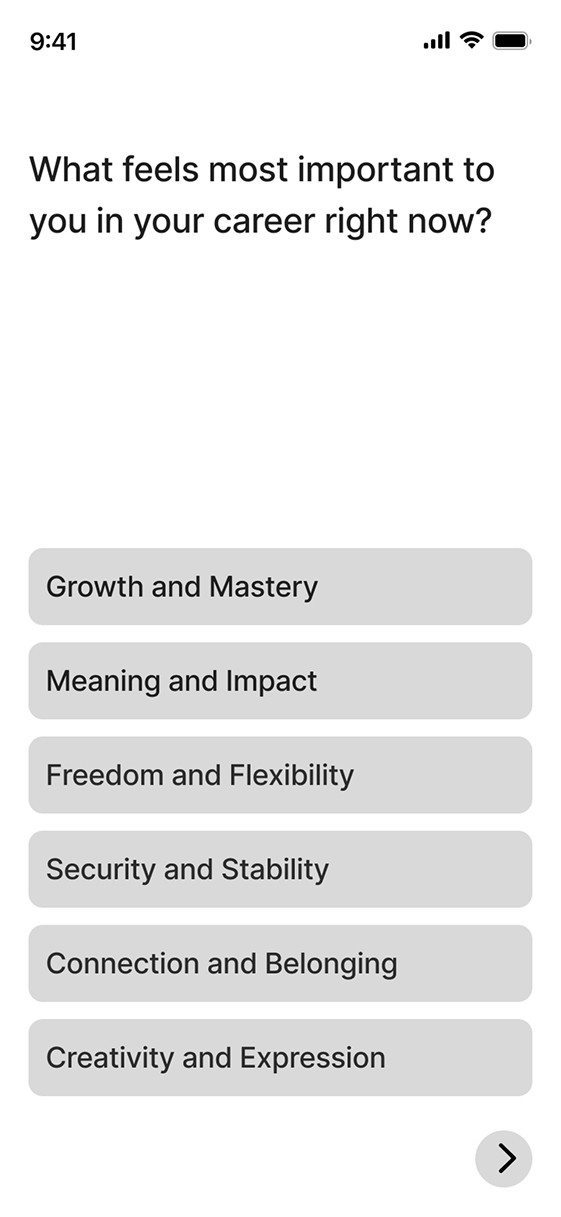
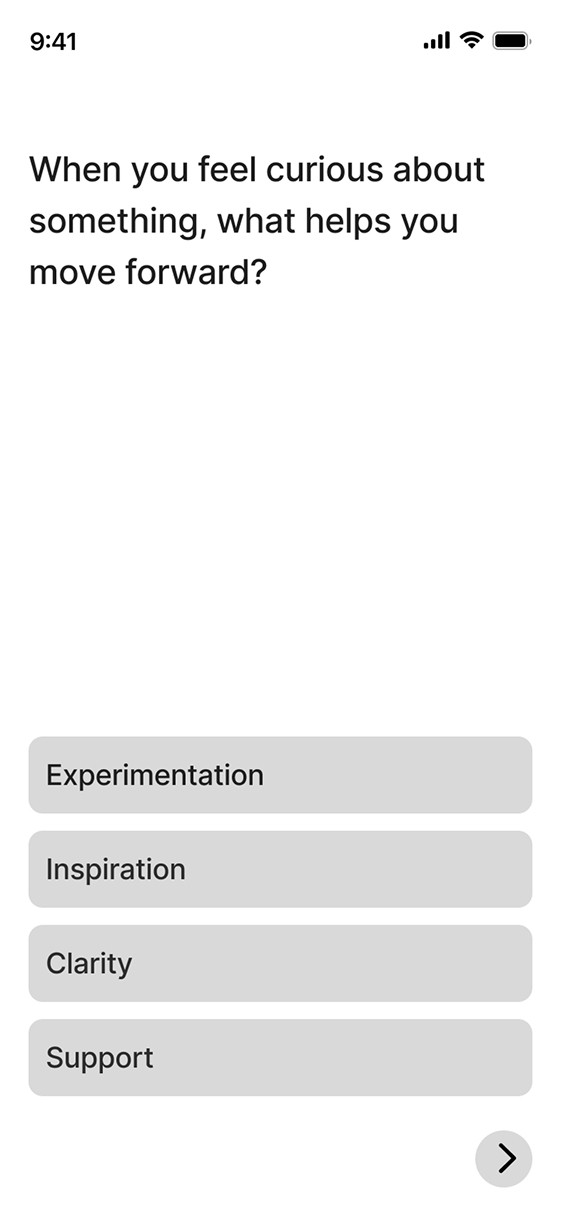
Intent →Context →Mindset →Value →Discovery Style →End Result.
I designed the onboarding to ask essential questions that move from intent and context to mindset and values, helping Polara understand what the user wants and why it matters.
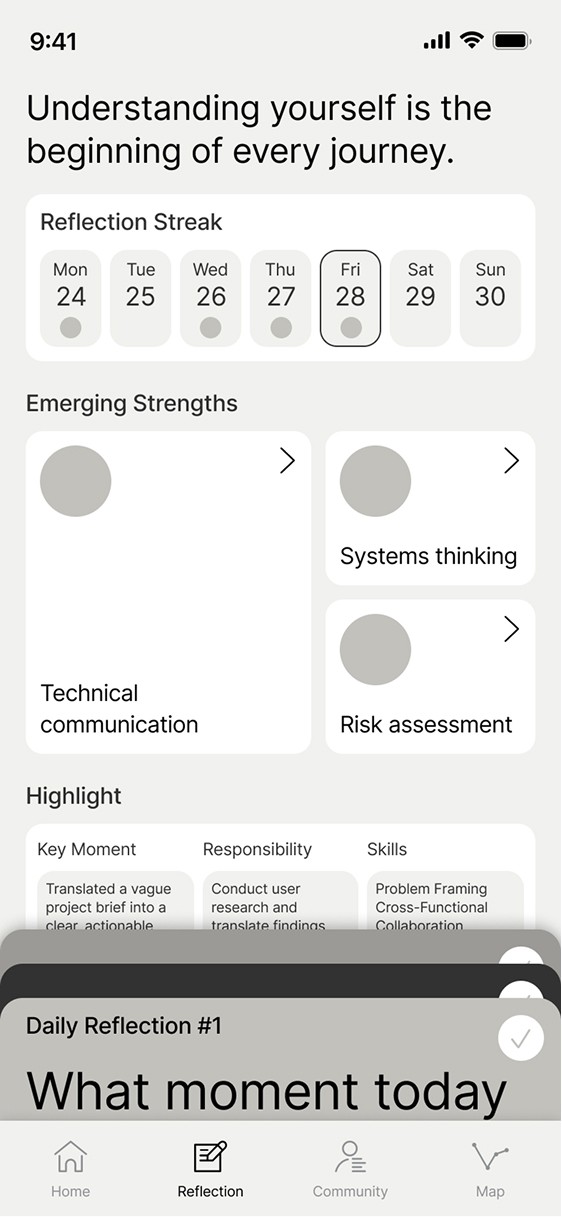
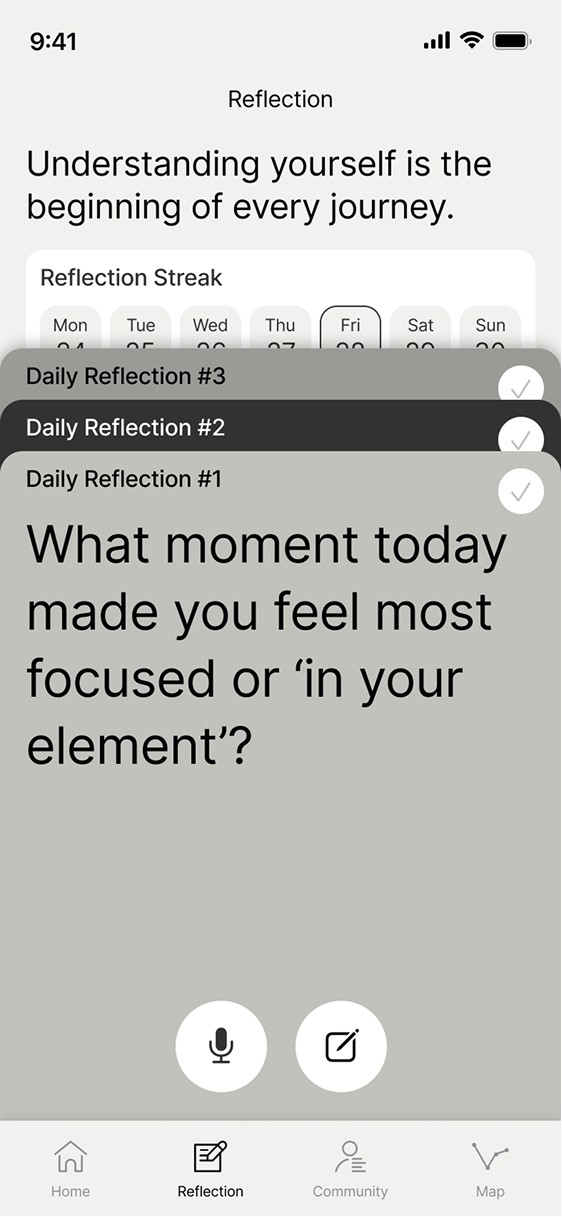
Reflection
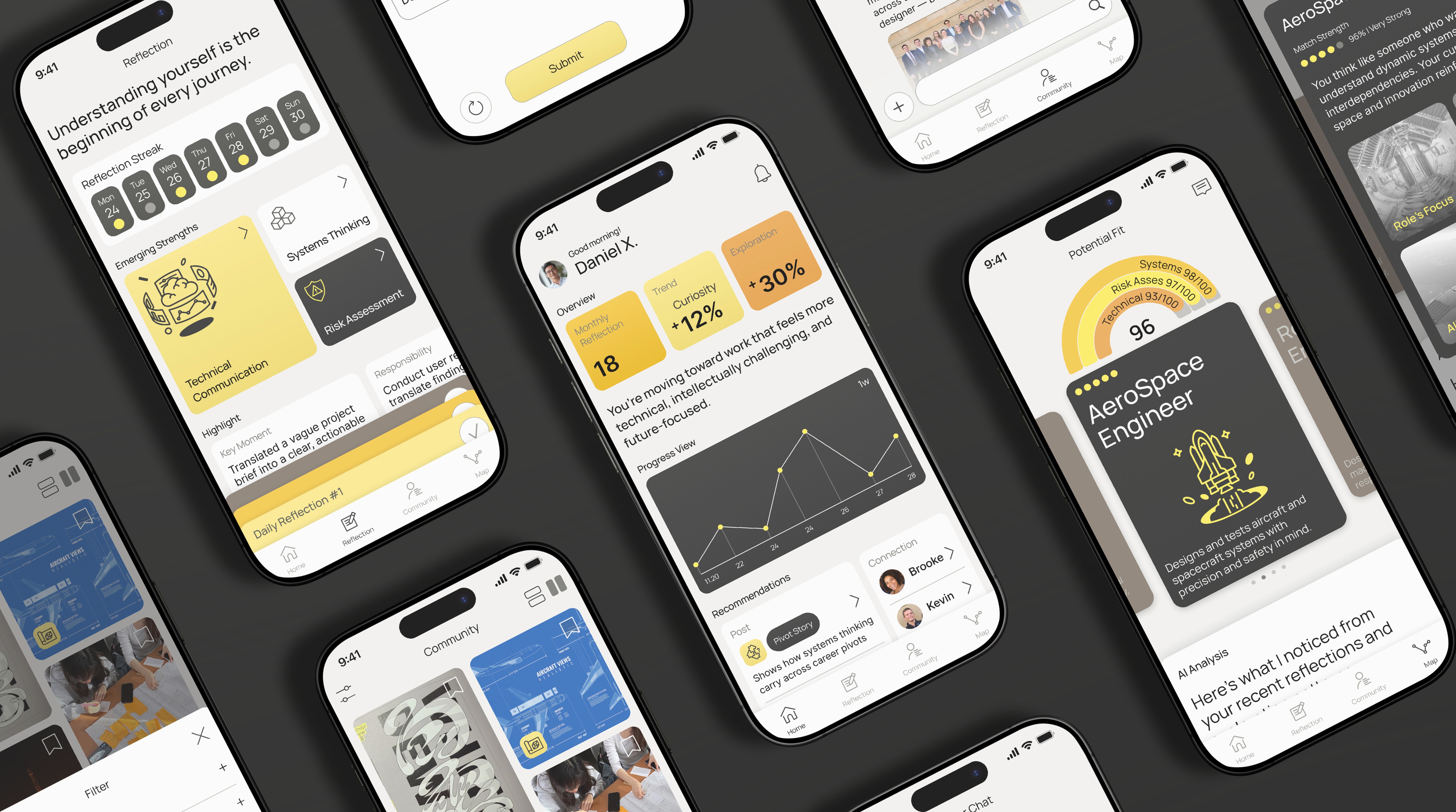
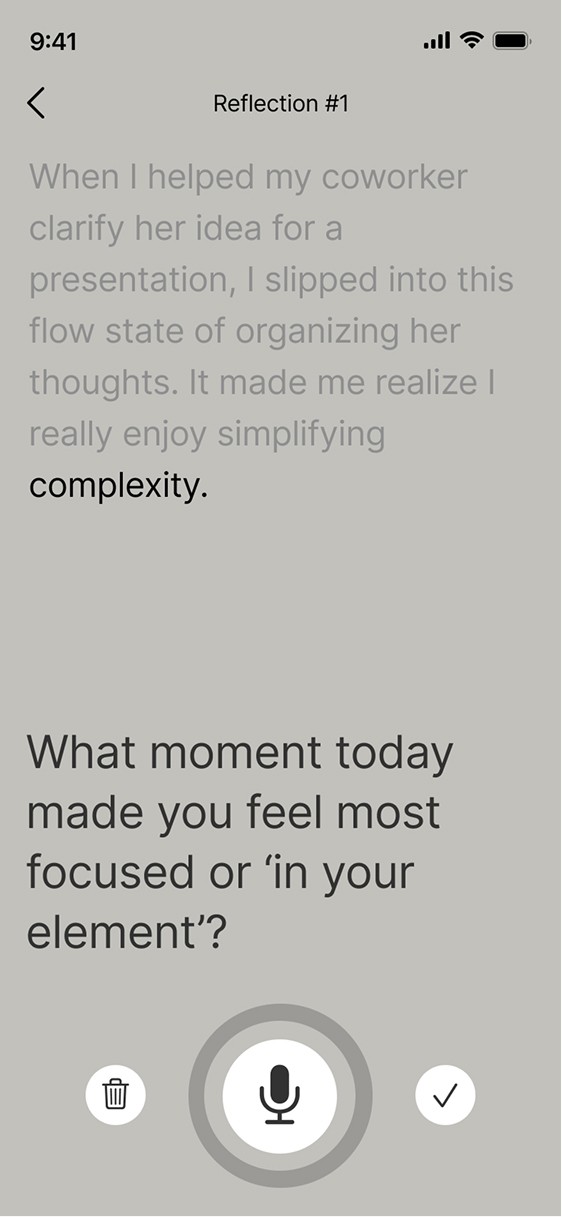
The reflection space is designed to understand users through reflections on everyday moments, revealing patterns that connect to potential career paths.
Community
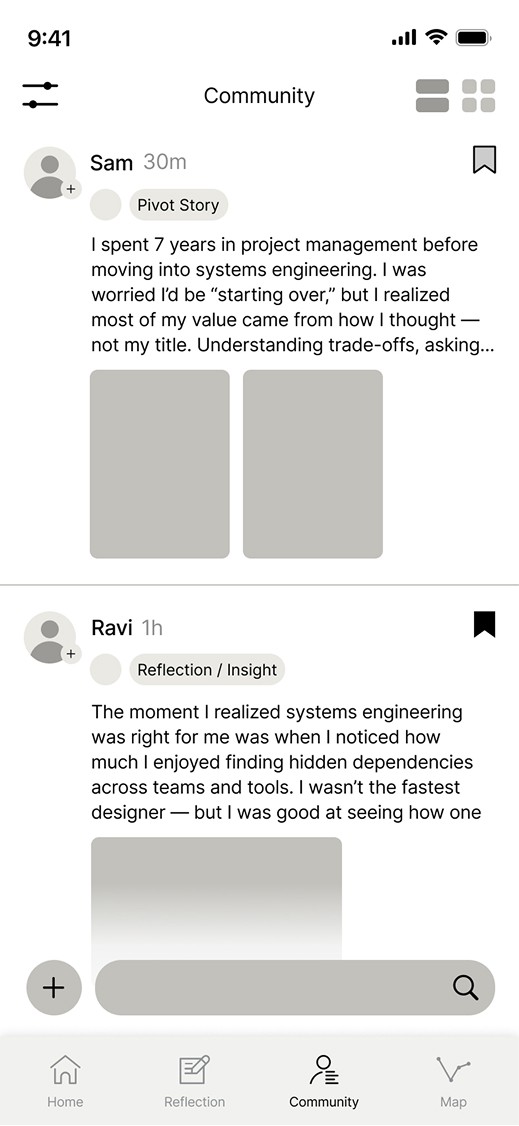
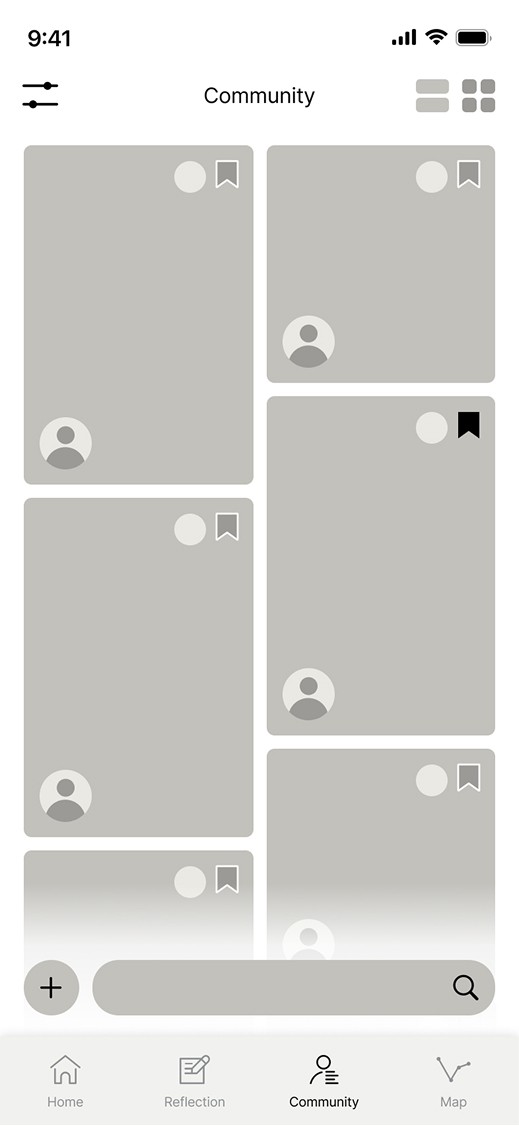
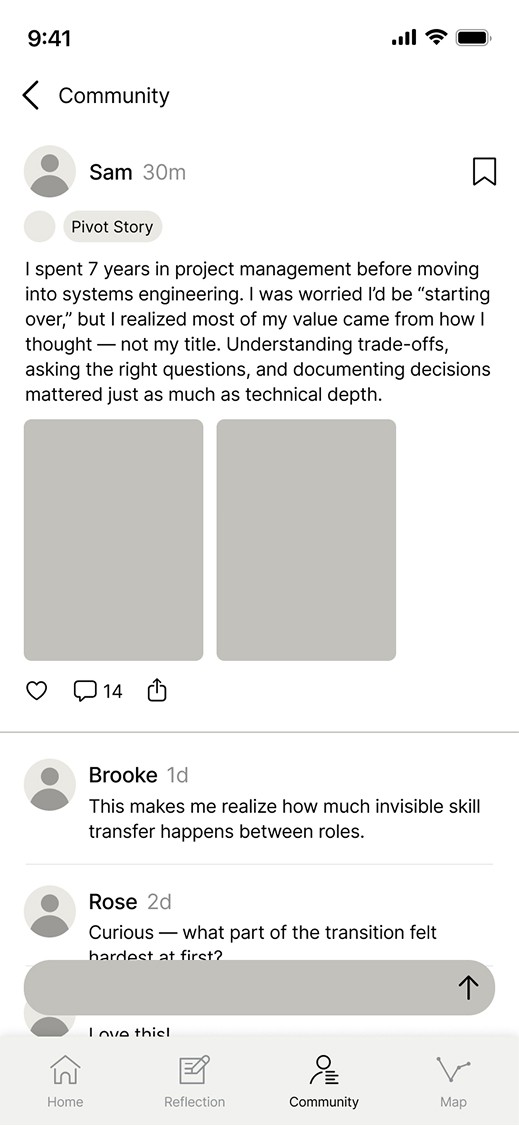
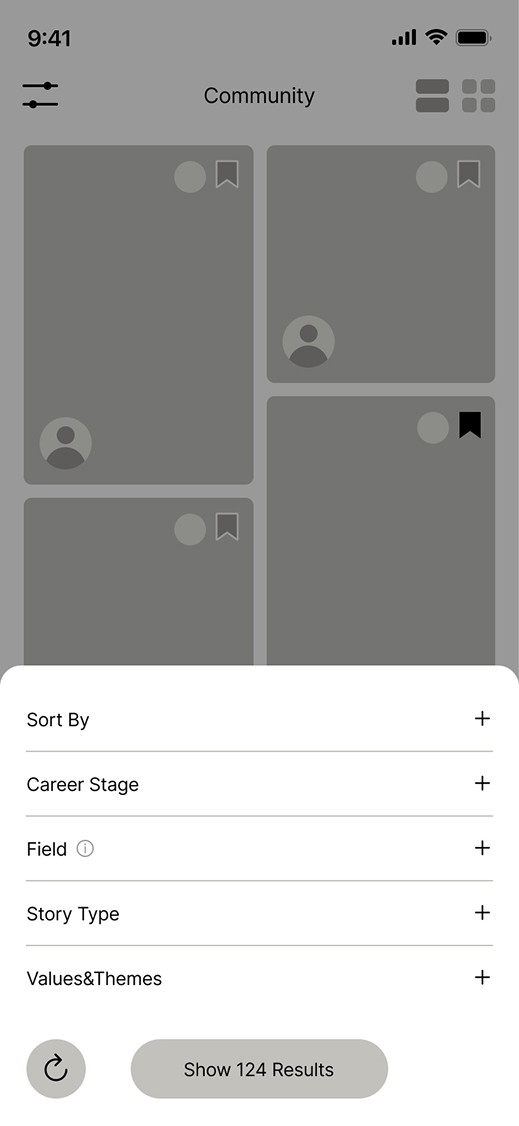
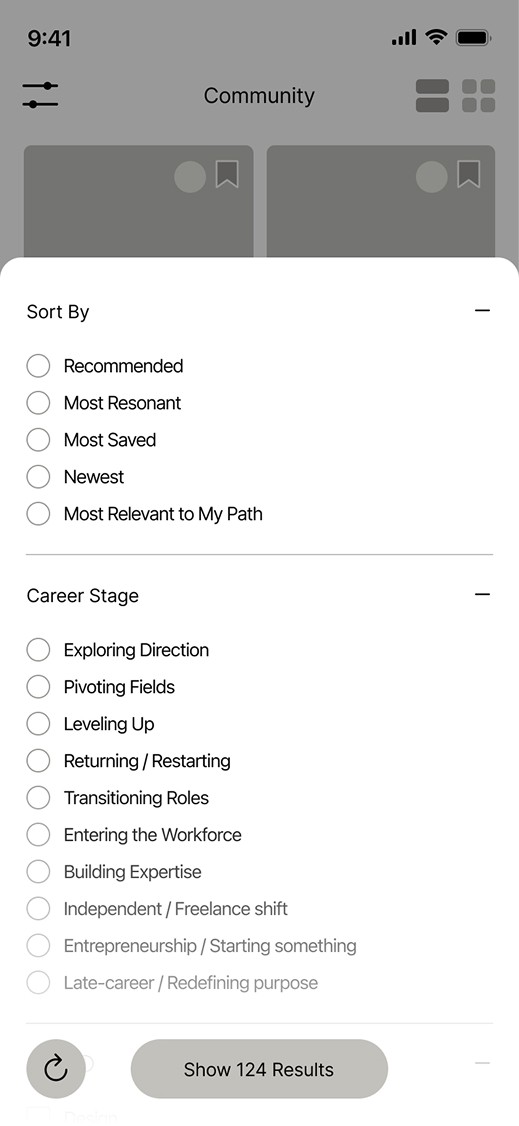
Community tab brings people together in a supportive environment where users can explore reflections and perspectives from others.
Map
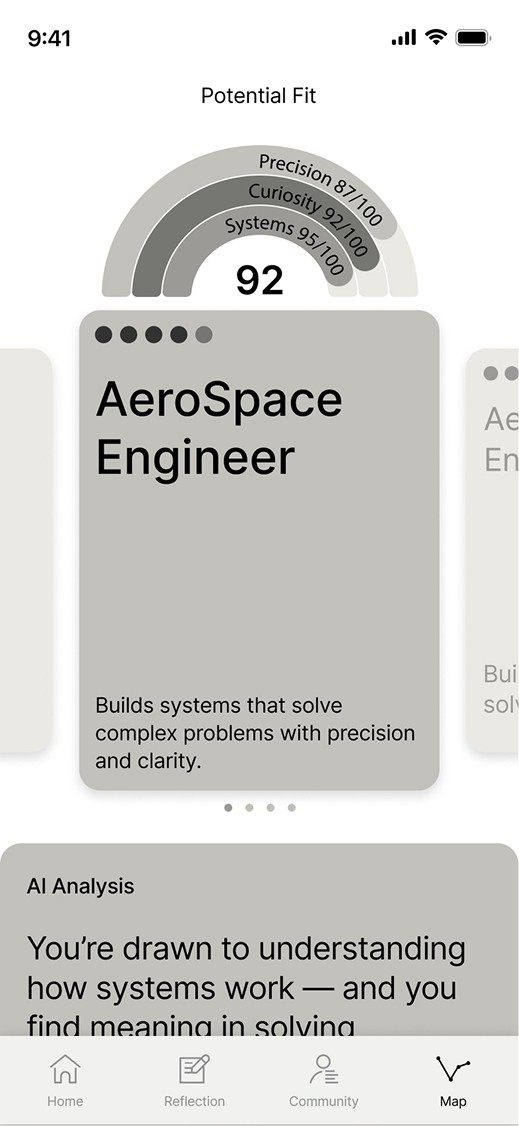
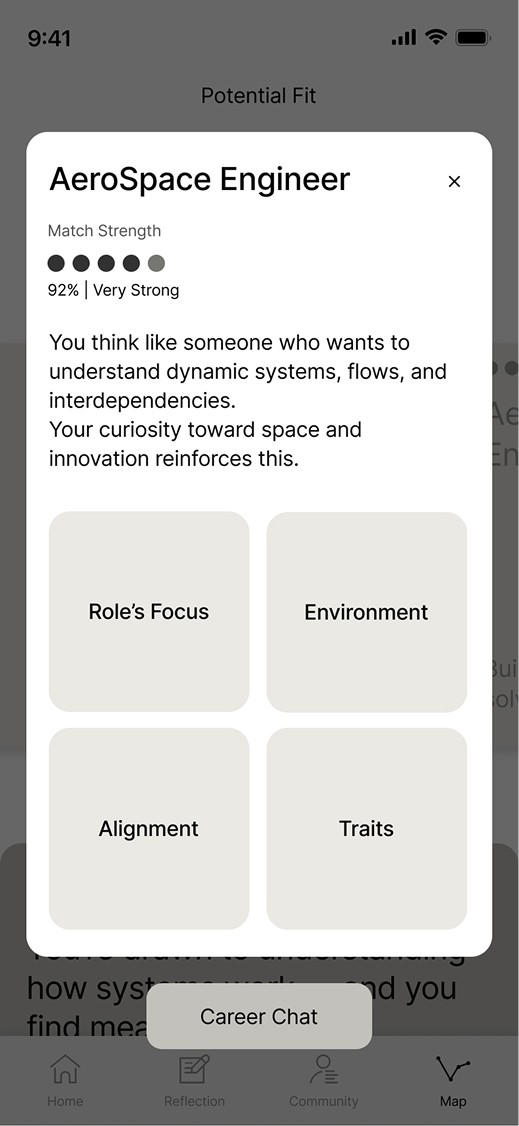
Map tab turns reflections and explorations into a navigable view of potential paths, revealing directions and connections rather than a single destination.
Career Chat
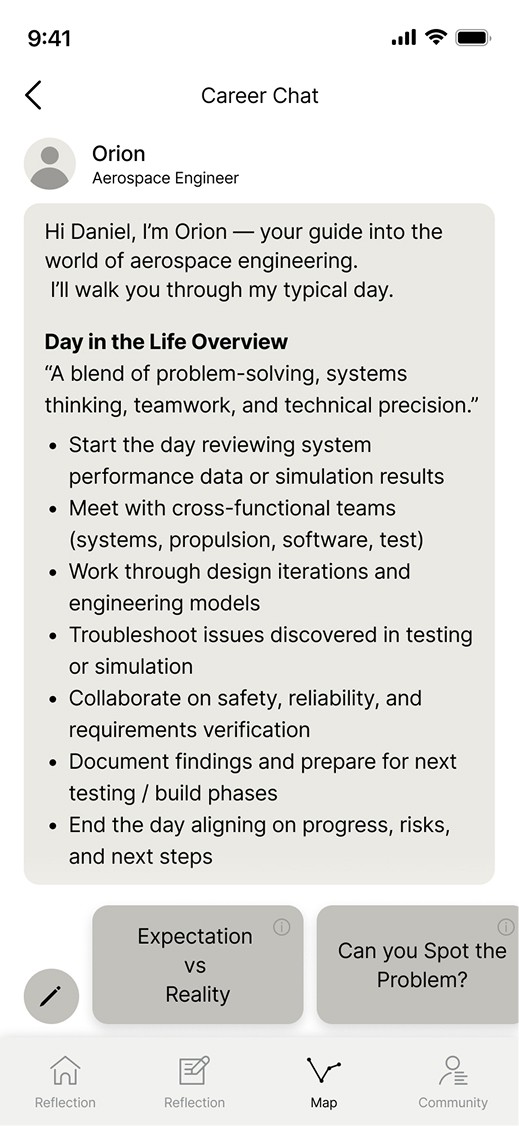
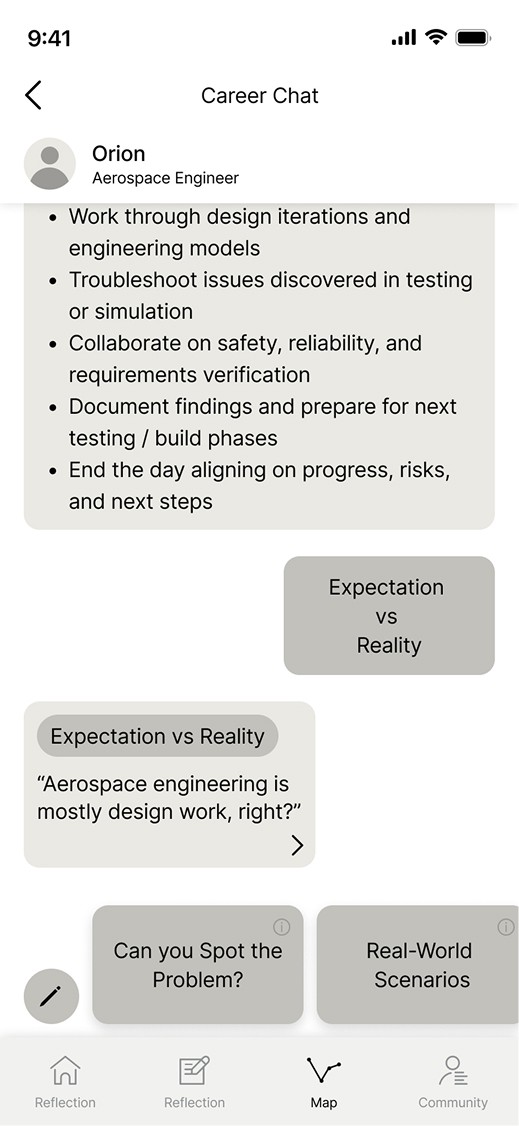
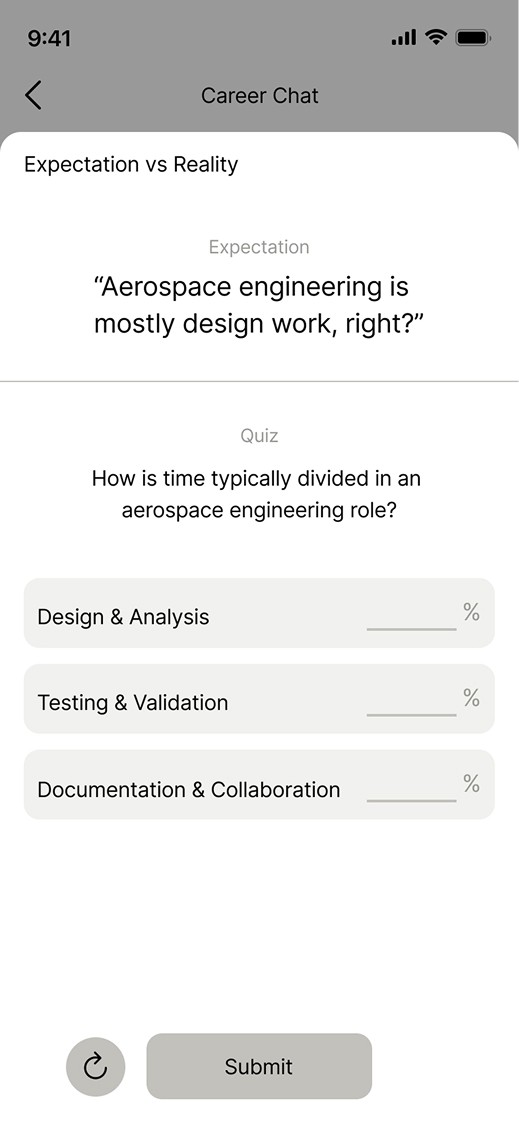
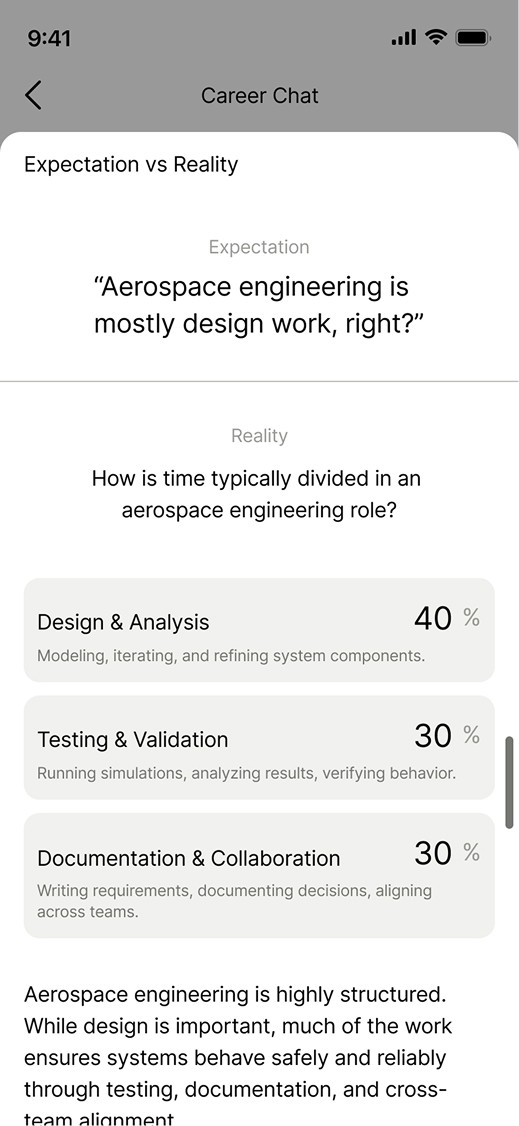
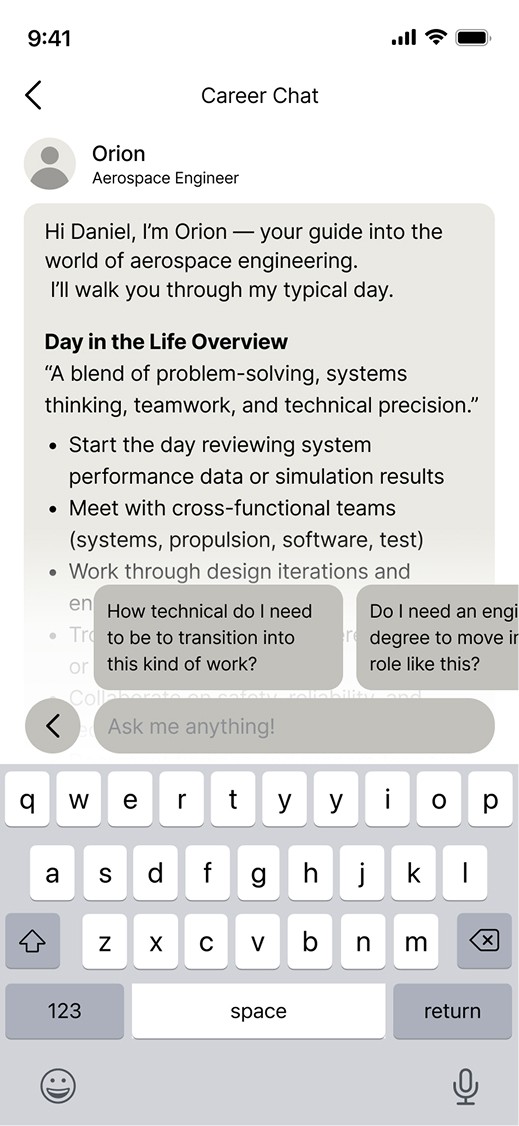
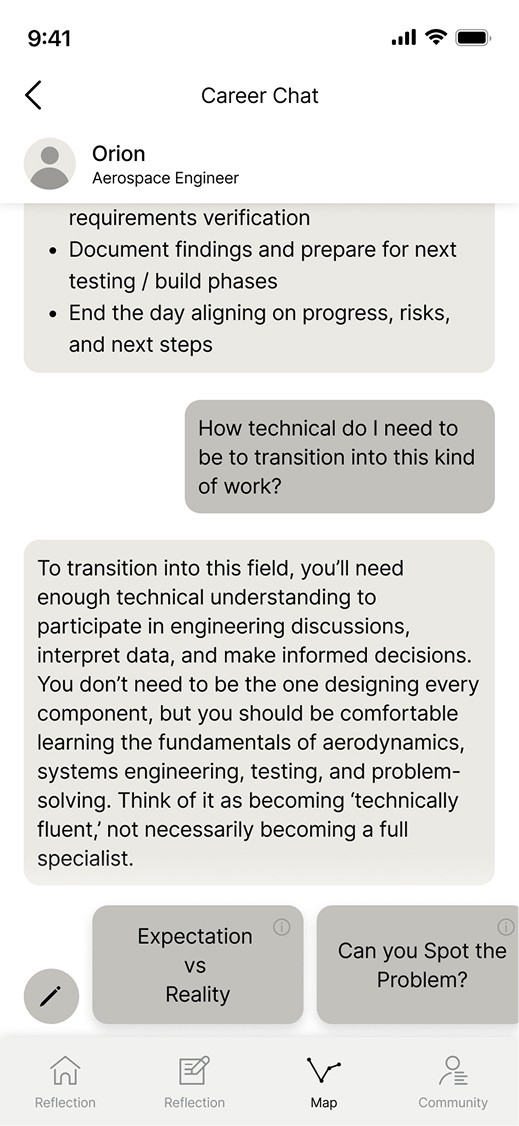
I designed Career Chat to help users explore careers through AI role personas, using curated questions and quizzes to deepen their understanding.
Starting Point
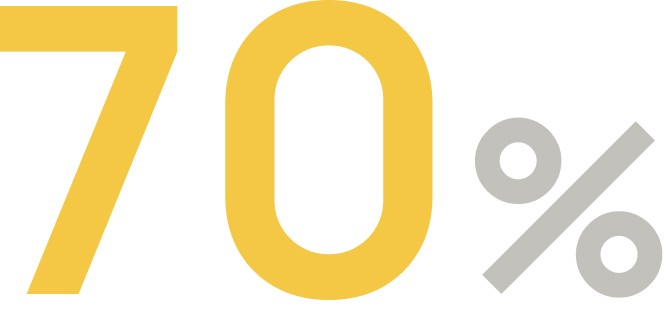
Employees globally are disengaged or not thriving at work, a sign that most people aren't in roles that actually fit them.
| Gallup, 2025
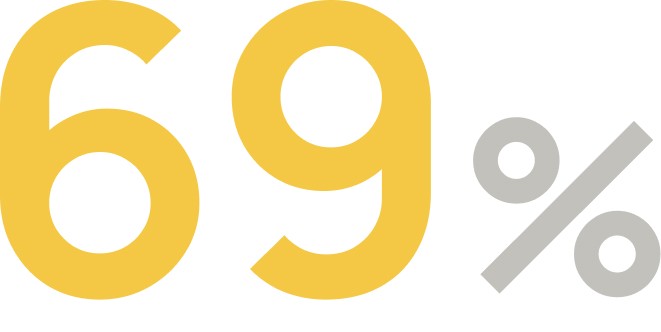
Of U.S. workers have seriously considered changing careers, reflecting how widespread career uncertainty is.
| FlexJobs, 2025

The average U.S. worker will hold across their career. Paths are no longer linear, and role changes are now the norm.
| BLS, 2025
How might I help people gain the self-clarity to move forward?
How People Actually Navigate Today
There were so many paths, I was confused, depressed and uncertain.
I didn't know which one was right for me.
Jane Y, Interaction Designer | Early
I didn't even realize I already had experience that counted.
Ian P, Graphic Designer | Early
I feel like nobody explains the in-between stuff.
Andres O, Fine Artist | Mid
I just kind of... jumped between LinkedIn, Reddit, and YouTube for hours
Dean P, Private Equity Investor | Mid
I interviewed 10 people across different career stages. Most couldn't identify their own patterns — what energizes them, what they value, where they actually want to go.
Almost all described arriving at their current path through trial and error, not through structured or self-aware process.
The Existing Landscape
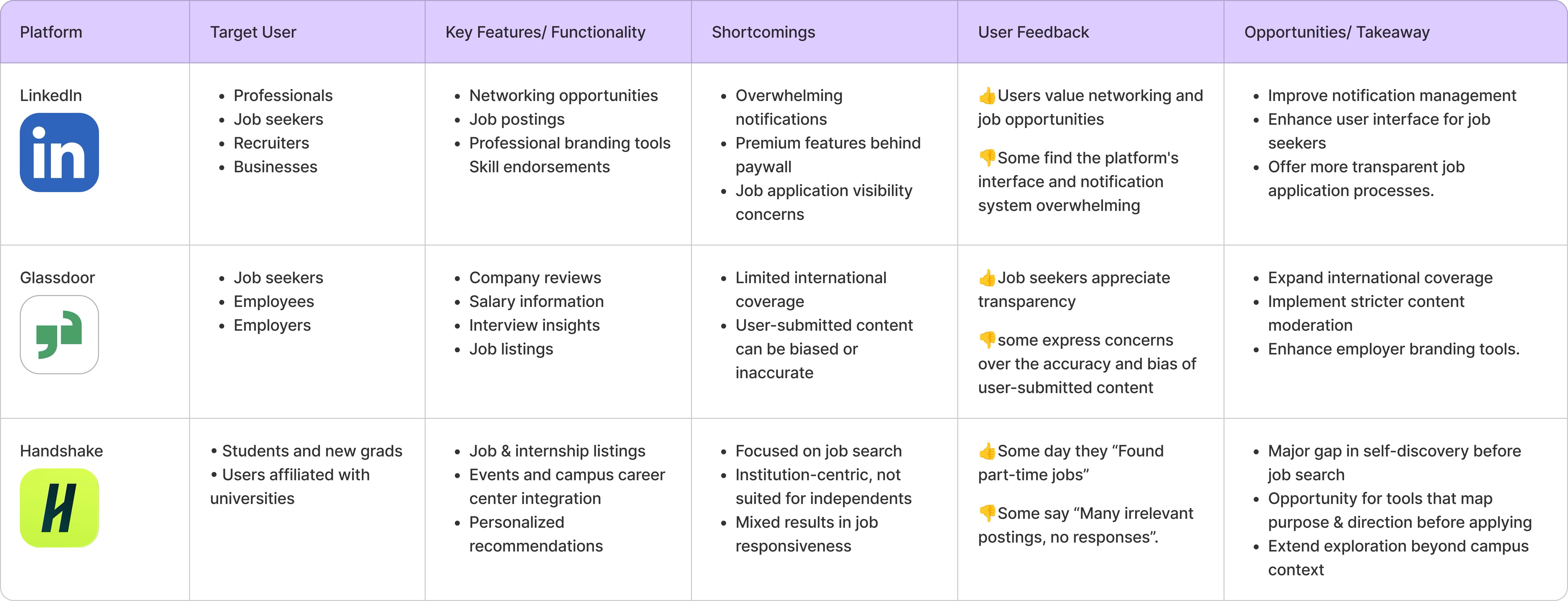
Across 10 platforms, the focus is almost always on job discovery or skill building. Career exploration and understanding who you are before deciding where to go is largely absent and where it exists, shallow.
Job Discovery
Skill Building
Self-Discovery
Where Polara Sits
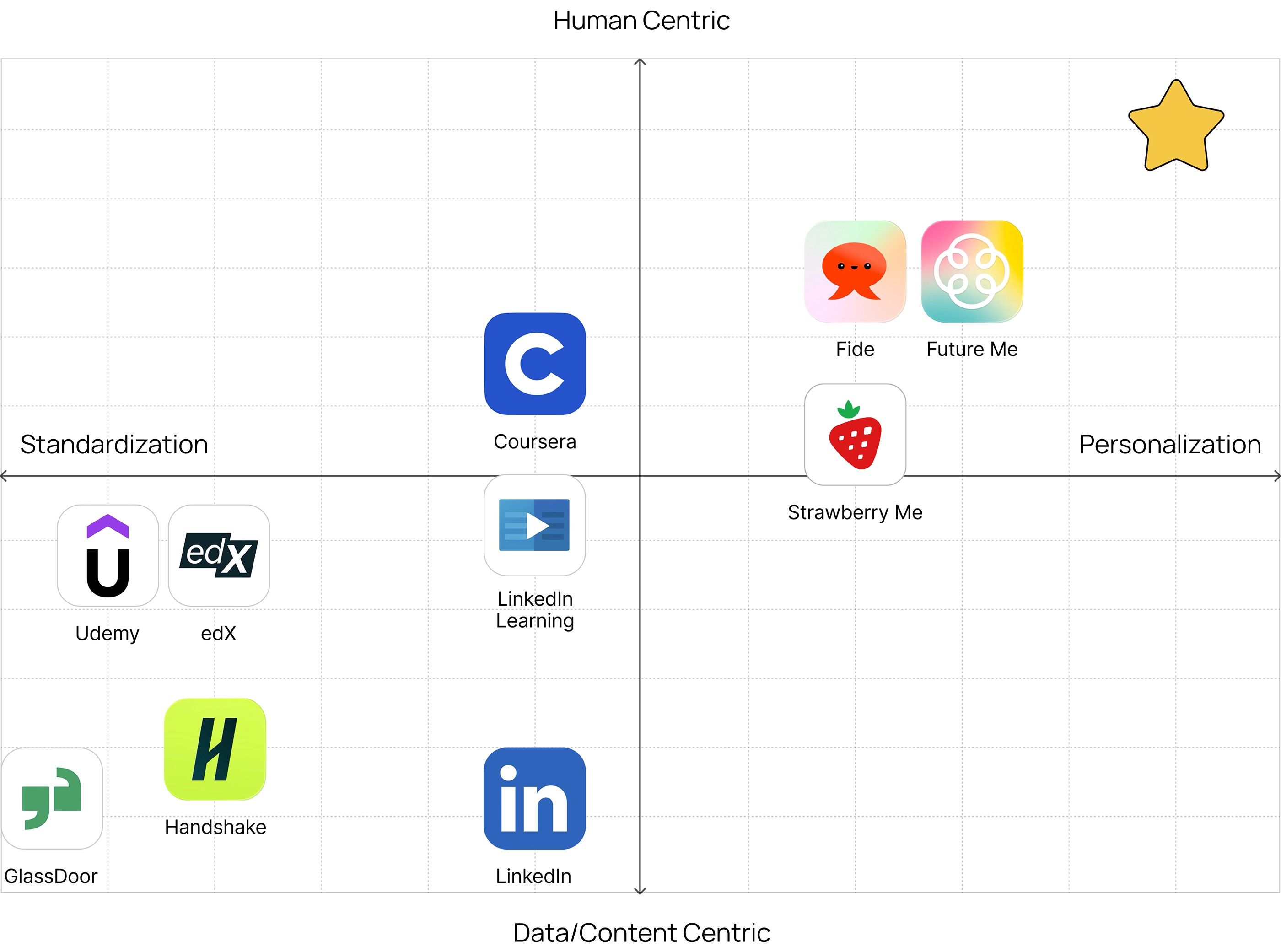
After mapping 10 platforms across two axes, one thing became clear: the tools that exist are built around information and action, not self-understanding. Polara occupies the space none of them do.
Who Polara is Built For
I’ve built something solid but is this really what I want to keep doing?

Daniel H.
36 years old | Mid Career
Senior Project Manager at a major tech firm.
Chose tech for its momentum, not because it felt right. A decade in, he's good at what he does, but not sure it's what he wants to keep doing.
Traits
Curious and systems-minded; finds meaning in understanding how things connect
Prefers deep, focused work over managing people and process
Values stability, but craves work that feels more personally meaningful
Pain Points
Can't see which roles would actually fit him beyond his current track
Reluctant to pivot without a clearer sense of where he'd land
Overwhelmed by how many adjacent paths exist with no way to compare them
Needs
A way to understand his own strengths before evaluating options
A structured, low-stakes way to explore without committing to anything
Real examples of people who've made similar transitions successfully
Solution
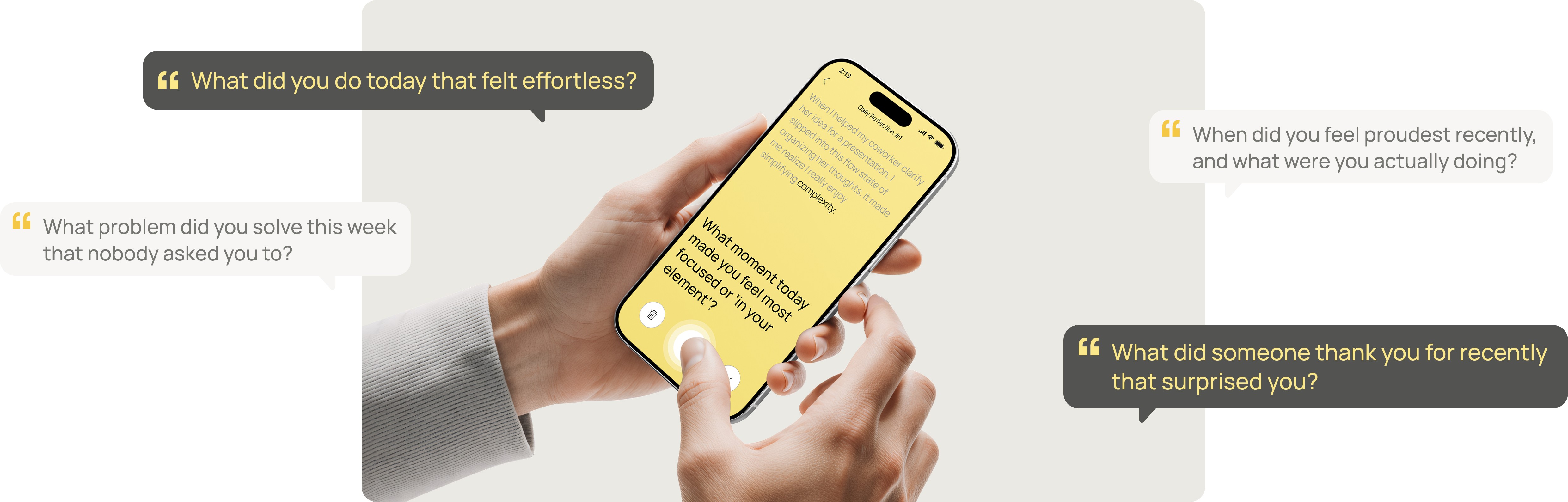
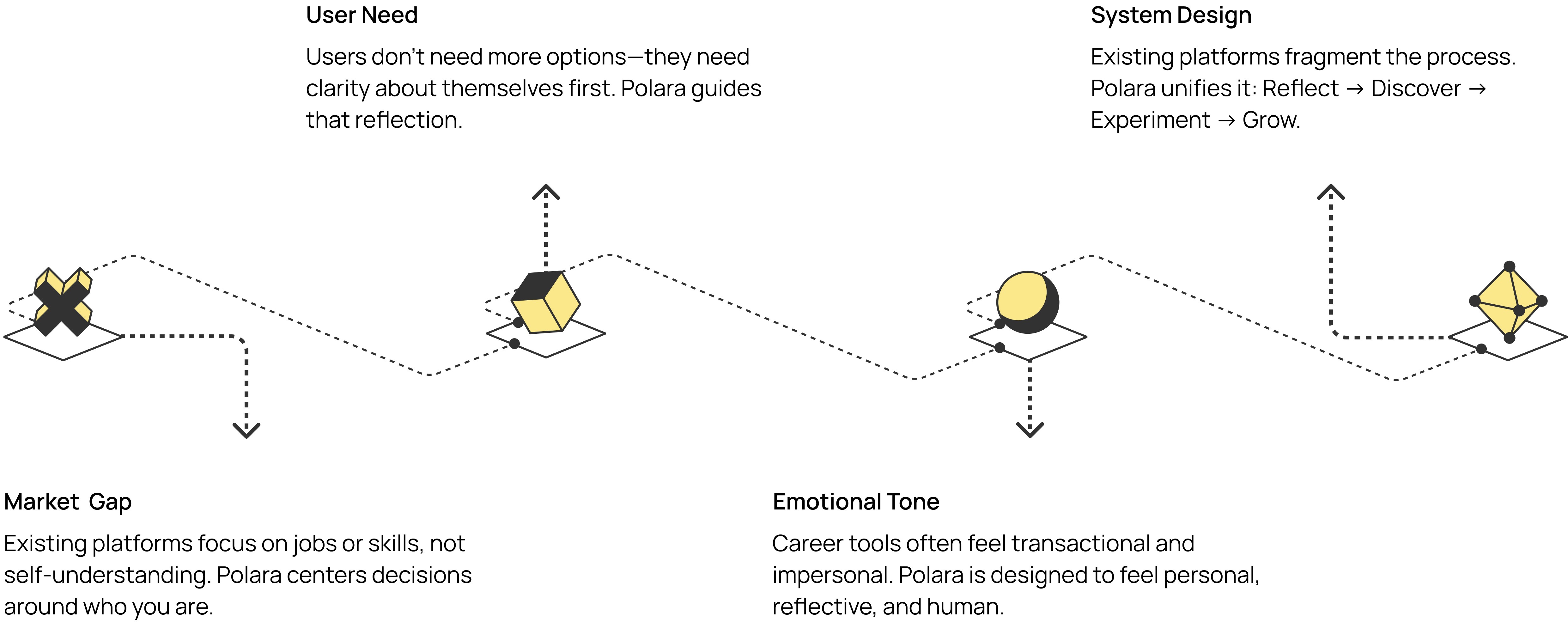
Most career tools ask where you want to go. Polara starts with something more fundamental: who you actually are.
The insight from research wasn't that people lacked options. It was that they lacked self-knowledge. Reflection on small, specific moments is what gradually surfaces that clarity.
Design Criteria
User Mapping
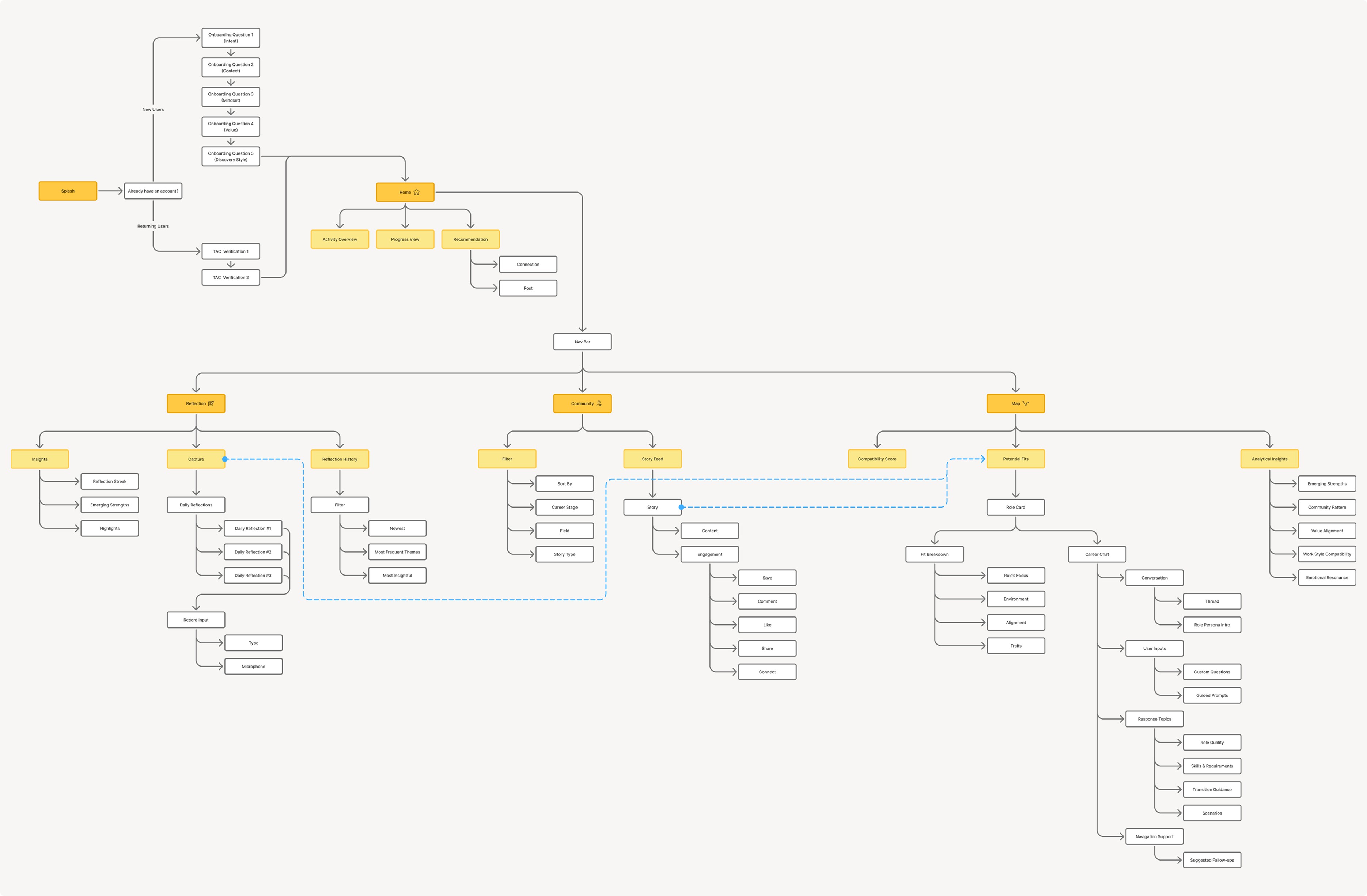
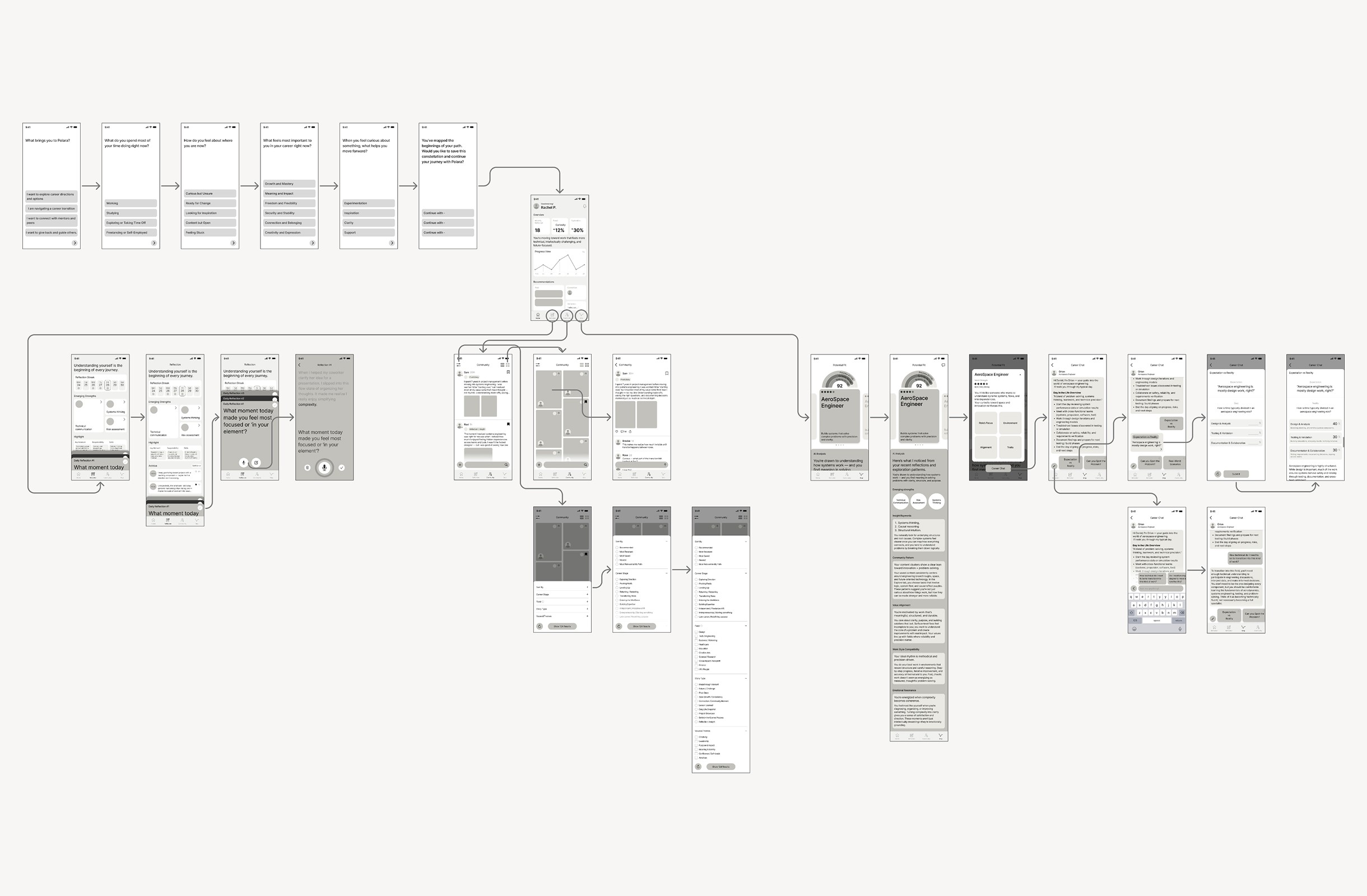
I mapped the full user journey and system architecture to ensure every feature connected back to a single goal: helping users build self-understanding over time.
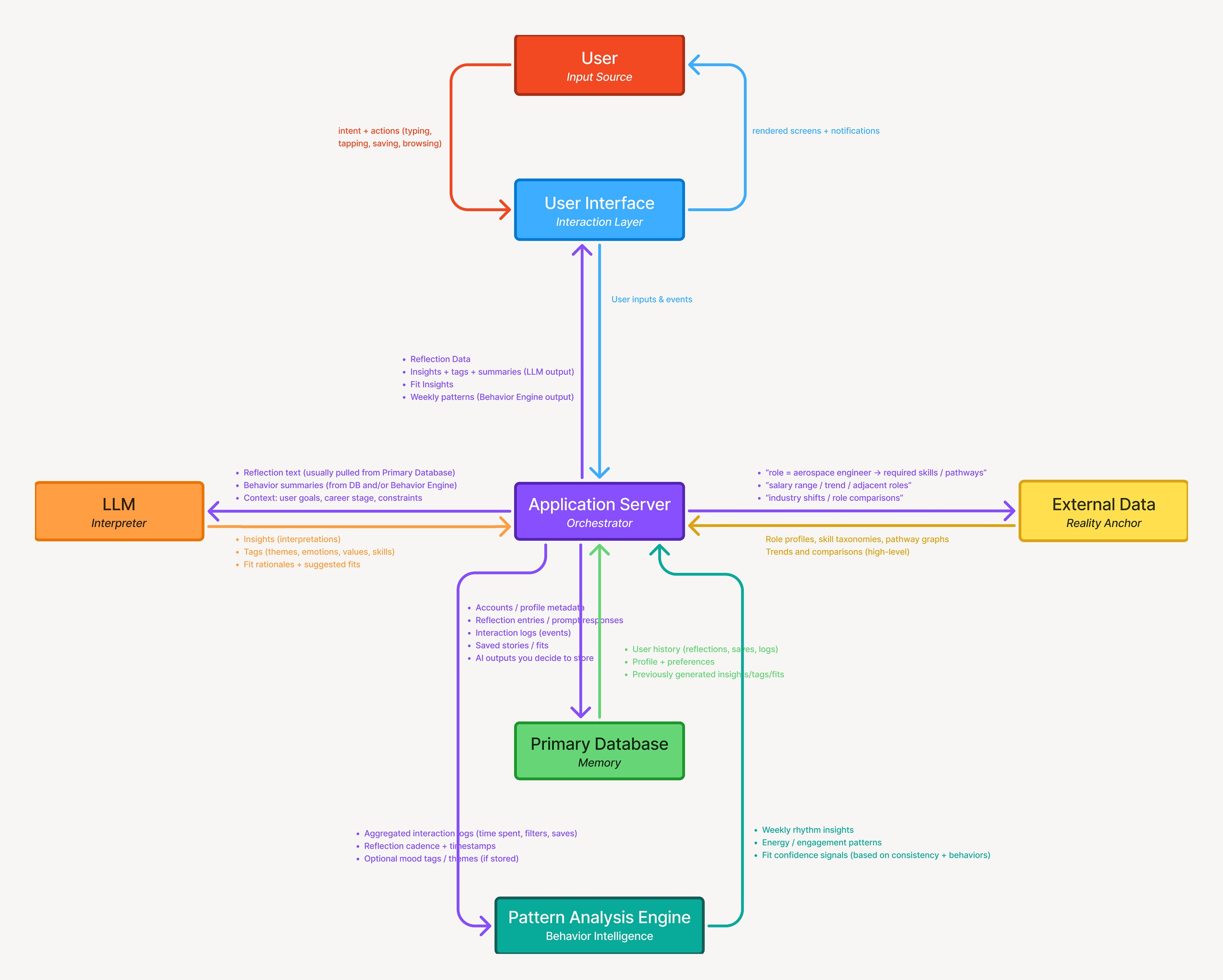
The system is built around a simple idea: the more you reflect, the more Polara understands you. Inputs flow from the interface through an application server to both an LLM — which interprets context — and a pattern analysis engine that tracks behavior over time. External data adds reference knowledge, but the output is always returned as reflective insight, not instruction.















































Visual System
Polara's palette is built on contrast — yellow against dark monotone, the way a single career direction can speak to you clearly once you finally see it. The same precision carries into the icon and illustration system, built on a geometric language with horizontal cut edges that represent career directions and themes like motivation, values, and reflection with clarity and consistency.
Reflection
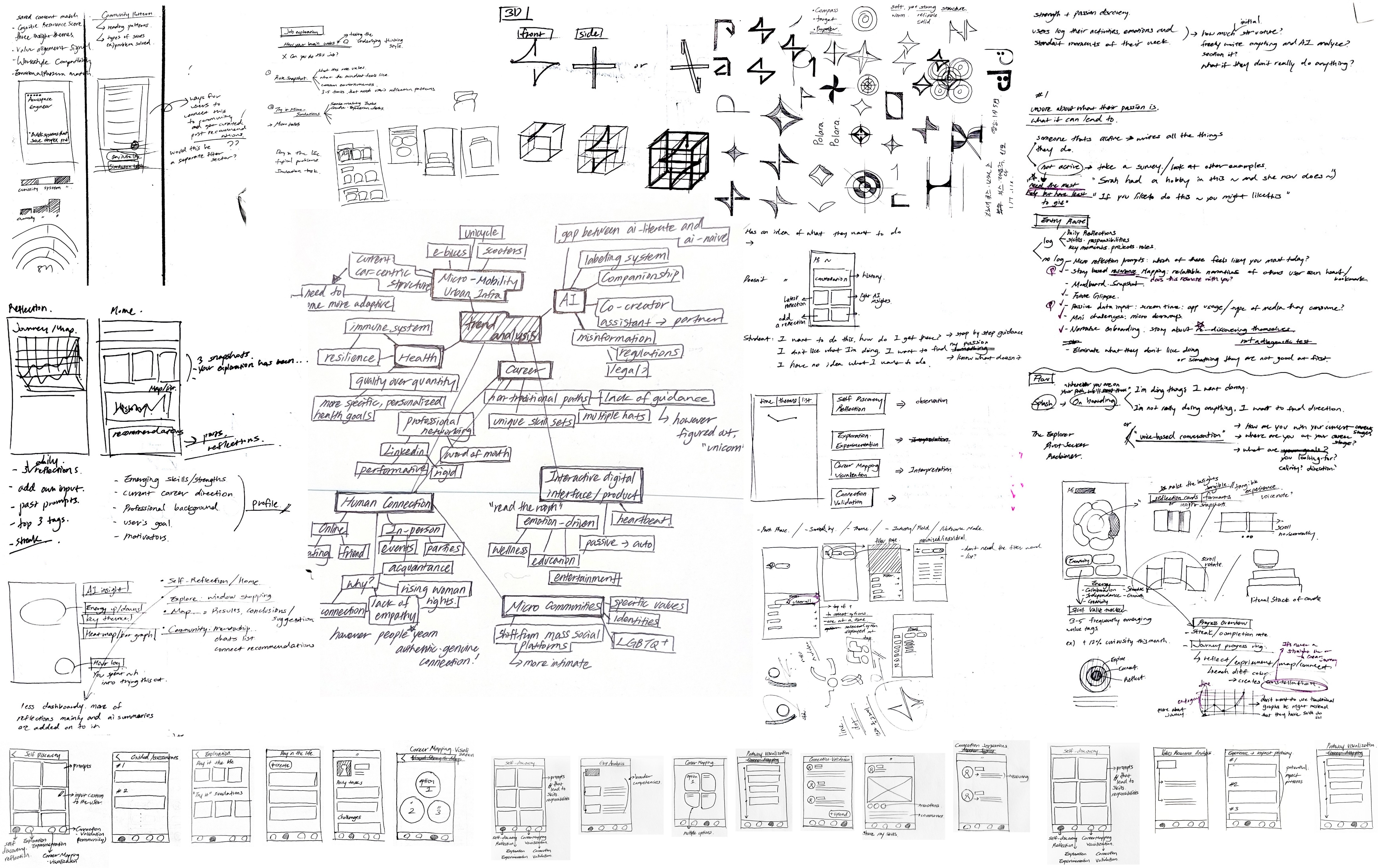
The hardest part wasn't designing the features — it was figuring out what question Polara was actually trying to answer. Early on I kept designing for career discovery, when the real problem was self-discovery. That reframe changed almost every decision that followed.
If I were to continue, I'd focus on the transition from self-knowledge to action — the moment a user has clarity and needs to know what to do with it. I'd also want to test whether the reflection prompts actually surface the patterns they're designed to, and whether users trust the insights enough to act on them.